Age-related macular degeneration is a common eye condition that affects the macula, the central part of the retina responsible for sharp, detailed vision. As the condition progresses, it can make activities such as reading, driving, recognizing faces, and seeing fine details more difficult. Early symptoms may be subtle and can include blurred central vision, difficulty seeing in low light, reduced contrast, or straight lines appearing wavy or distorted. Because these changes may develop gradually, regular eye examinations are important for identifying signs before vision becomes significantly affected.
Several factors can increase the likelihood of developing age-related macular degeneration, including age, family history, smoking, and certain cardiovascular health conditions. Treatment depends on the type and stage of AMD and may include regular monitoring, nutritional supplements for appropriate patients, injectable medications, or low-vision support. Knowing the warning signs and risks can help protect your vision.
HOW AMD CHANGES CENTRAL VISION
Age-related macular degeneration, often shortened to AMD, affects the macula, the small central area of the retina responsible for sharp, detailed vision. The macula helps you read, recognize faces, drive, see colours clearly, and focus on fine details. When this area begins to deteriorate, central vision can become less clear even while peripheral vision remains relatively unaffected. This is why AMD can interfere with everyday tasks without causing complete blindness.
There are two main forms of AMD: dry AMD and wet AMD. Dry AMD is the more common form and usually progresses gradually. It develops as the macula becomes thinner with age and small deposits called drusen collect beneath the retina. Many people with early dry AMD have few noticeable symptoms, which makes regular eye examinations especially important.
Wet AMD is less common but can cause more rapid and serious vision changes. It develops when abnormal blood vessels grow beneath the retina and begin leaking fluid or blood. This leakage can damage the macula and cause sudden distortion or loss of central vision. Because wet AMD can progress quickly, new or sudden changes should be assessed promptly.
Early symptoms may be easy to overlook. Some people notice that they need brighter light to read, while others find that printed words appear slightly blurry. Straight lines may begin to look bent or wavy, and faces can become harder to recognize. Colours may appear less vivid, and adapting to dim lighting may take longer than before.
Common warning signs include:
- Blur
- Distortion
- Shadows
- Dullness
- Difficulty
- Contrast
One of the most recognizable symptoms is distortion. A door frame, window blind, telephone pole, or line of text may no longer appear straight. A dark, empty, or blurry area may also develop near the centre of vision. These changes may affect one eye before the other, so the stronger eye can sometimes compensate and make the problem less obvious.
AMD does not usually cause eye pain. For that reason, people should not wait for discomfort before scheduling an examination. Changes in central vision, reading ability, or visual sharpness deserve attention even if the eyes otherwise feel normal.
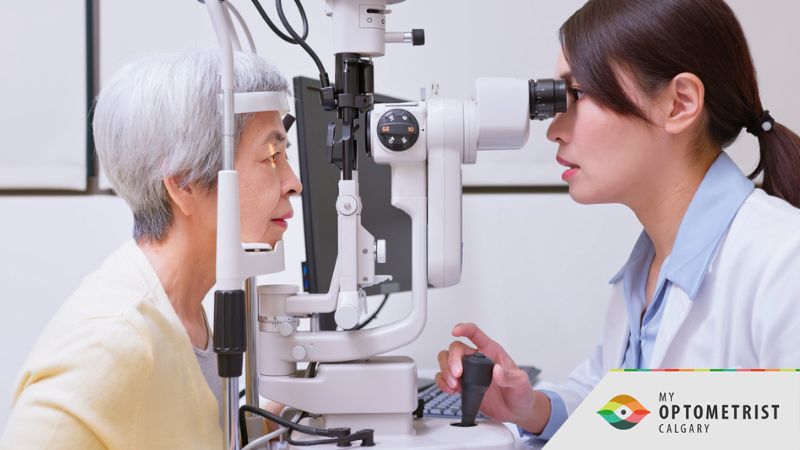
An optometrist can examine the retina and macula during a comprehensive eye examination. Dilated retinal evaluation and imaging such as optical coherence tomography may help identify structural changes or fluid. Detecting these changes early gives patients a better opportunity to monitor progression and discuss appropriate management before vision becomes more significantly affected.
RISK FACTORS THAT CAN INCREASE AMD
Age is the strongest risk factor for AMD, with the condition becoming more common later in life. However, age is not the only factor that matters. Genetics, smoking, cardiovascular health, nutrition, and other lifestyle factors may influence a person's likelihood of developing the condition or experiencing progression over time.
Family history is particularly important. People with close relatives who have AMD may have a higher risk themselves. Sharing this history with your optometrist can help determine whether closer monitoring is appropriate, especially as you get older.
Smoking is one of the most significant modifiable risk factors. Cigarette smoke can contribute to oxidative stress and reduced blood flow, both of which may affect retinal health. People who currently smoke or have smoked for many years may have a higher likelihood of developing advanced AMD.
Other factors that may matter include:
- Age
- Genetics
- Smoking
- Diet
- Activity
- Pressure
Cardiovascular health and eye health are closely connected because the retina depends on a steady blood supply. High blood pressure, elevated cholesterol, and other vascular concerns may influence retinal health. Managing these conditions with appropriate medical care may support overall eye health.
Nutrition may also play a supportive role. A balanced diet that includes leafy green vegetables, colourful fruits and vegetables, fish, and other nutrient-rich foods can provide vitamins and antioxidants that support retinal health. Healthy habits cannot guarantee that AMD will be prevented, but they can be part of a broader approach to reducing modifiable risk factors.
Routine comprehensive eye examinations become increasingly important with age, particularly for people with a family history of AMD or other known risk factors. Early AMD may not noticeably change vision, so an eye examination can reveal changes that a patient may not detect on their own.
Between appointments, some patients may be advised to monitor central vision using an Amsler grid. This simple pattern can help reveal new distortion, missing areas, or changes in central vision. Any sudden change should be reported promptly rather than waiting for the next routine visit.
TREATMENT OPTIONS AND ONGOING MANAGEMENT
Treatment for age-related macular degeneration depends on the type of AMD, the stage of the condition, and how much the macula has been affected. There is no single treatment that is appropriate for every patient, which is why accurate diagnosis and ongoing monitoring are essential.
Early dry AMD may not require medical treatment. Instead, management often focuses on regular eye examinations, retinal monitoring, and lifestyle measures that support overall health. Patients may be encouraged to avoid smoking, stay physically active, maintain a balanced diet, and manage blood pressure and cholesterol.
For some people with intermediate or advanced AMD, an AREDS2 nutritional supplement may be recommended. These supplements contain a specific combination of vitamins, minerals, lutein, and zeaxanthin that may help slow progression in certain patients. They are not intended for everyone, so patients should speak with an eye care professional before starting them.
Management options may include:
- Monitoring
- Supplements
- Injections
- Imaging
- Rehabilitation
- Lighting
Wet AMD is commonly treated with anti-VEGF injections. These medications are injected into the eye to reduce the activity of abnormal blood vessels and help control leakage beneath the retina. Treatment may help stabilize vision and, in some cases, improve some of the vision that has been affected. Injection frequency varies depending on the medication and how the retina responds.
Advanced dry AMD can lead to geographic atrophy, where areas of retinal tissue gradually deteriorate. Newer injectable treatments may be considered for some patients to slow the progression of this atrophy. These treatments do not restore vision that has already been lost, but they may help slow further damage in appropriate cases.
Ongoing monitoring remains important even after treatment begins. Retinal imaging can help eye care providers track fluid, structural changes, and treatment response. Appointment schedules may become more frequent if the condition is active or changing.
Patients should also pay attention to sudden changes between visits. New wavy lines, a dark spot, rapid central blurring, or a noticeable decline in one eye should be assessed promptly. Wet AMD can change quickly, so early treatment can be important for preserving useful vision.
When AMD causes permanent vision loss, low-vision rehabilitation can help patients make better use of their remaining sight. Magnifiers, electronic reading devices, improved lighting, high-contrast settings, and other visual aids can make everyday tasks easier and support independence.
Regular follow-up gives patients opportunities to ask questions and understand how their retinal health changes over time.
If you notice changes in central vision, straight lines becoming distorted, or increasing difficulty with reading and recognizing faces, schedule a comprehensive eye examination. Early evaluation can help determine whether AMD or another eye condition is responsible and allow your optometrist to recommend appropriate next steps.
FAQ's:
Q: WHAT ARE THE FIRST SIGNS OF MACULAR DEGENERATION?
A: Early signs may include blurred central vision, difficulty reading, reduced contrast, or straight lines appearing wavy.
Q: CAN MACULAR DEGENERATION CAUSE COMPLETE BLINDNESS?
A: AMD mainly affects central vision and generally does not eliminate peripheral vision, although advanced disease can significantly affect daily activities.
Q: WHEN SHOULD I SEE AN OPTOMETRIST ABOUT AMD SYMPTOMS?
A: Schedule an eye examination if you notice new distortion, central blurring, dark spots, or sudden changes in your vision