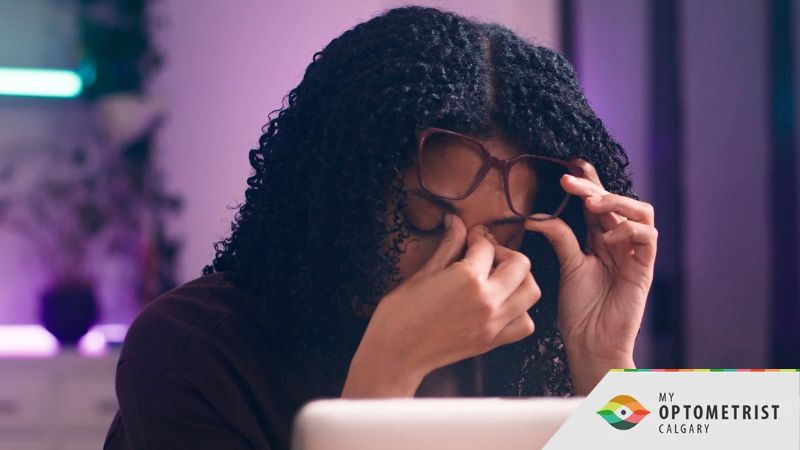
Long hours at a computer can leave your eyes feeling tired, dry and uncomfortable. If you also experience blurry vision or headaches, you may wonder whether computer glasses, blue light lenses or Neurolens could help. The right option depends on what is causing your symptoms and how you use your eyes throughout the day.
Computer glasses provide prescription support for your screen distance, while blue light lenses filter a portion of blue light. However, research has not shown a clear short-term benefit from blue light filtering for digital eye strain. Neurolens uses contoured prism technology to address eye alignment demands in suitable patients.
Understanding these differences can help you make a more informed decision about your eyewear. At My Optometrist, an eye assessment can help determine whether computer glasses or Neurolens may ease your discomfort.
Computer Glasses
Spending hours at a computer can leave your eyes feeling tired long before your workday ends. You might notice blurred words, difficulty maintaining focus or a headache that builds as you move between your monitor and phone. When these symptoms become familiar, choosing different glasses can seem like the obvious next step.
However, computer glasses, blue light lenses and Neurolens serve different purposes. Understanding those differences helps you ask better questions and choose eyewear based on your needs rather than a product label. The most suitable option depends on your prescription, working distance, eye coordination and the activities that trigger discomfort.
At My Optometrist, we help patients explore their symptoms and understand which options may support more comfortable vision. An assessment provides the starting point for discussing whether computer glasses, Neurolens or another approach belongs in your care plan.
Computer Glasses Support Focus
Computer glasses are designed to provide prescription support at the distance where you use your screen. A desktop monitor usually sits farther away than a book or phone, which means glasses intended for close reading may not provide the same comfort when viewing your computer.
Likewise, glasses prescribed mainly for distance vision may not meet every demand of prolonged desk work. Your optometrist can consider how your prescription relates to your workstation and whether a task specific lens design would be appropriate.
Your daily activities help guide that discussion. Someone who regularly switches between paperwork and two monitors has different viewing requirements from someone using a laptop for occasional emails. Describing those tasks gives your optometrist useful information beyond your prescription numbers.
Before your appointment, consider these details:
- Distance
- Screens
- Posture
- Duration
Measure approximately how far your eyes sit from your monitor. Think about whether you lean forward, lift your chin or move closer to read smaller text. Note when discomfort starts and whether particular tasks make it worse.
Single vision computer lenses provide correction for a selected working distance. Other occupational designs can accommodate more than one range, helping with tasks that involve both a screen and nearby documents. Each design has benefits and limitations, so ask which activities your recommended glasses are intended to support.
Some computer glasses are unsuitable for driving or other distance activities. Understanding their intended use matters just as much as choosing comfortable frames. Your optometrist or optician can explain when to wear them and whether you need a separate pair for everyday distance vision. www.ccohs.ca
Lens treatments may also enter the discussion. An anti-reflective coating reduces reflections from lens surfaces, but it does not replace an accurate prescription or an appropriate lens design. Ask what each recommended feature contributes to your particular pair.
Computer glasses can be useful when your prescription and working distance contribute to discomfort. However, they do not automatically address every reason your eyes feel tired. Persistent symptoms deserve assessment rather than repeated changes to eyewear without understanding the underlying problem.
Blue Light Lenses Explained
Blue light lenses filter a portion of short wavelength visible light. They are widely associated with screen use, which can make them sound like a standard requirement for anyone who spends time on digital devices.
However, blue light filtering and prescription computer correction are separate features. A filter changes some of the light passing through a lens. A prescription changes how light is focused to support your vision. One does not automatically provide the benefits of the other.
This distinction is important when comparing products. Non-prescription blue light glasses will not correct an unrecognized prescription problem. Adding a blue light filter also does not establish whether your glasses suit the distance between your eyes and your monitor.
A Cochrane review of randomized controlled trials found that blue light filtering lenses may offer no short-term advantage for computer related eye strain compared with lenses without this filtering. Evidence about improvements in sleep quality was uncertain. www.cochrane.org
That does not mean you cannot discuss these lenses with your optometrist. It means expectations should reflect the evidence. Blue light filtering should not be treated as a guaranteed solution for headaches, tired eyes or screen discomfort.
When reviewing lens options, ask about:
- Purpose
- Evidence
- Prescription
- Cost
These questions help you understand which features address an identified need and which are optional additions. They also create space to discuss other factors that may matter more for your comfort.
Screen habits remain relevant regardless of your lenses. Regular breaks, conscious blinking and adjustments to glare can form part of your routine. The Canadian Association of Optometrists recommends the 20-20-20 approach: every 20 minutes, look approximately 20 feet away for 20 seconds.
You can also increase text size, adjust screen brightness to suit your surroundings and reposition your monitor to reduce reflections. These changes complement personalized advice rather than replacing an examination when symptoms persist. www.opto.ca
If you already wear blue light glasses and remain uncomfortable, explain that during your appointment. Your experience can help guide the conversation toward prescription needs, dry eyes, focusing or eye coordination instead of assuming that stronger light filtering is the next step.
Neurolens Addresses Alignment Demands
Clear vision involves more than recognizing small letters. Your eyes also need to coordinate as you look between objects at different distances. Some patients experience discomfort associated with those demands, making eye coordination an important part of the assessment.
Neurolens uses contoured prism technology to address alignment demands in suitable patients. It serves a different purpose from blue light filtering and may be incorporated into prescription eyewear when an optometrist determines that it is appropriate.
At My Optometrist, a Neurolens assessment helps establish whether this option may suit your needs. Your symptoms, examination findings and daily activities all contribute to the recommendation. Headaches or tired eyes alone do not confirm that you need prism lenses.
For your consultation, describe whether discomfort occurs during reading, computer work or other activities. Explain whether your current glasses provide clear vision and what still feels difficult. Bring your existing eyewear and mention any previous changes that helped or failed to improve comfort.
Useful topics to discuss include:
- Symptoms
- Suitability
- Alternatives
- Follow-up
Research has investigated Neurolens for headache impact, but results from selected study participants should not be interpreted as a promise that everyone will benefit. Your optometrist can discuss realistic expectations and how your response will be reviewed. pmc.ncbi.nlm.nih.gov
Choosing between computer glasses, blue light lenses and Neurolens starts with identifying what each option is intended to accomplish. Computer glasses support selected working distances. Blue light lenses filter light. Neurolens introduces contoured prism for appropriate alignment related needs. These features are not interchangeable, even when they appear in the same pair of glasses.
You do not need to arrive at your appointment knowing which product to request. Start with what you notice: when your eyes become uncomfortable, how long you can work comfortably and which activities you avoid because of symptoms. A clear description helps your optometrist connect the examination findings with your experience and explain why a particular recommendation may be worth considering for your everyday visual comfort and needs.
Contact My Optometrist to discuss persistent screen discomfort and arrange an eye assessment. Learn more about our Neurolens service and take the next step toward eyewear recommendations based on your vision and daily routine.
FAQ's:
Q: ARE COMPUTER GLASSES AND BLUE LIGHT GLASSES THE SAME?
A: Computer glasses support your prescription at screen distance, while blue light glasses filter a portion of blue light. A pair can combine both features, but they serve different purposes. Your optometrist can recommend suitable eyewear based on your prescription, working distance and symptoms.
Q: HOW DO I KNOW IF NEUROLENS IS RIGHT FOR ME?
A: An eye assessment can help determine whether Neurolens suits your needs. Your optometrist will consider your symptoms, prescription and eye coordination before recommending treatment. Bring your current glasses and explain when discomfort occurs, then discuss expected benefits, alternatives and follow-up.
Q: WHY DO MY EYES FEEL TIRED EVEN WITH GLASSES?
A: Your eyes may feel tired despite clear vision because of an outdated prescription, unsuitable screen lenses, dryness or eye coordination difficulties. Your optometrist can assess these factors and recommend appropriate eyewear, dry eye care or workstation adjustments to help improve comfort.